
Infrared Light Therapy
Support recovery. Reduce pain. Promote healthy tissue function.
Sometimes what your body needs isn't more medication or another round of rest — it needs the right kind of support to finally start healing.
Infrared Light Therapy, also known as photobiomodulation, uses specific wavelengths of red and near-infrared light to support the body's natural healing processes. Unlike treatments that generate heat, this therapy delivers light energy to tissues in a controlled, non-invasive manner.
At Acadiana Pain & Performance Rehab, Infrared Light Therapy is used as part of a comprehensive rehabilitation program to help reduce pain, support tissue recovery, and complement evidence-based treatments such as therapeutic exercise, manual therapy, and movement retraining.
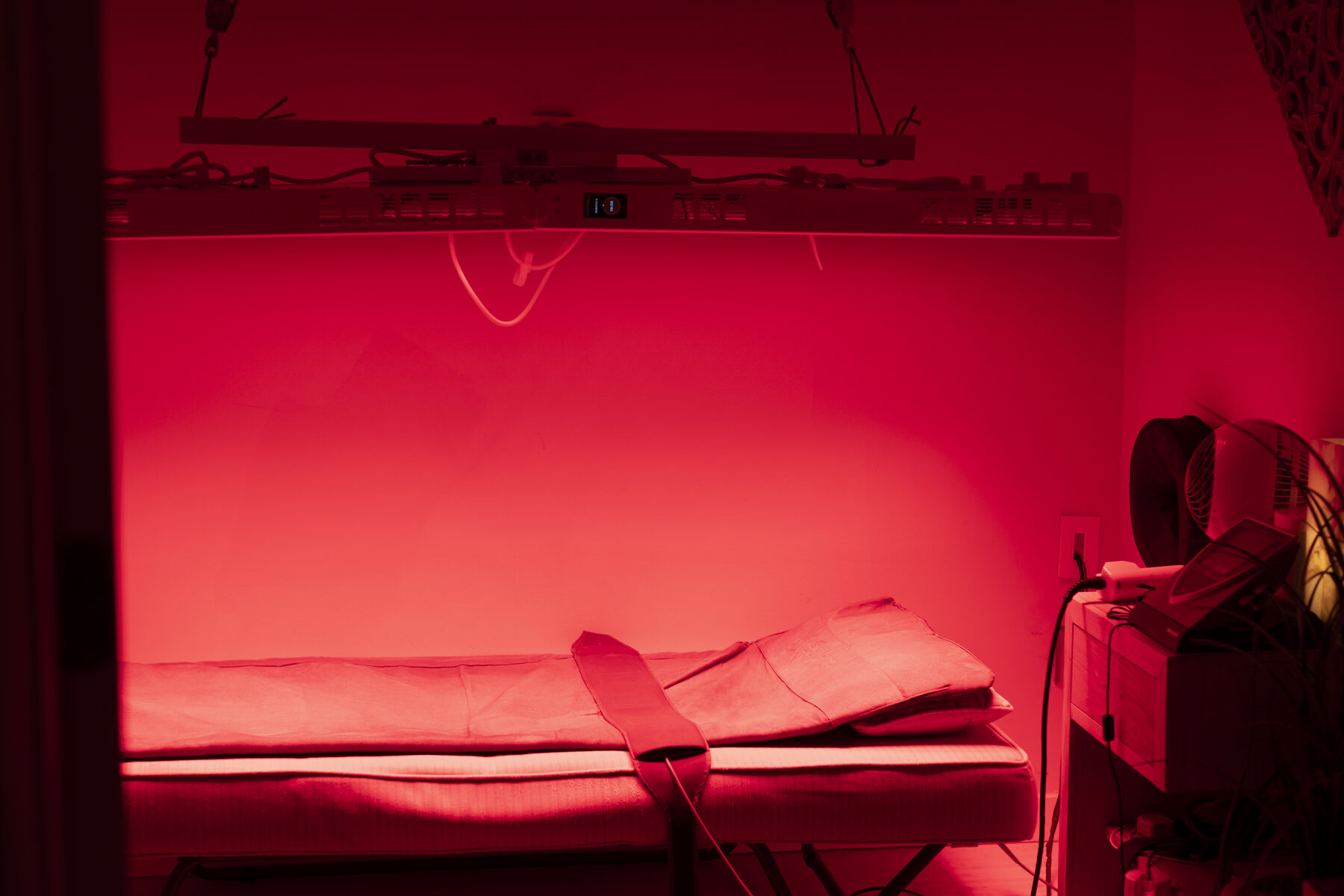
What Is Infrared Light Therapy?
Photobiomodulation uses red and near-infrared light to stimulate normal biological processes within cells.
Research suggests that certain wavelengths of light may influence cellular activity, supporting normal tissue repair and reducing inflammation in some musculoskeletal conditions. While the exact biological mechanisms continue to be studied, Infrared Light Therapy has become an increasingly common tool in sports medicine, rehabilitation, and pain management.
It is a painless, non-invasive treatment with no required recovery time.
Potential Benefits
Infrared Light Therapy may help:
- Reduce pain associated with certain musculoskeletal conditions
- Support the body's natural healing response
- Reduce inflammation in injured tissues
- Promote healthy circulation in the treated area
- Improve recovery following exercise or injury
- Support tissue repair as part of a comprehensive rehabilitation program
Individual results vary depending on the condition being treated and the overall rehabilitation plan.
Conditions Commonly Treated
Infrared Light Therapy may be appropriate for conditions such as:
- Muscle strains
- Tendon injuries
- Ligament sprains
- Joint pain
- Neck pain
- Back pain
- Shoulder pain
- Sports injuries
- Overuse injuries
- Soft tissue injuries
Your clinician will determine whether Infrared Light Therapy is appropriate based on your evaluation and treatment goals.
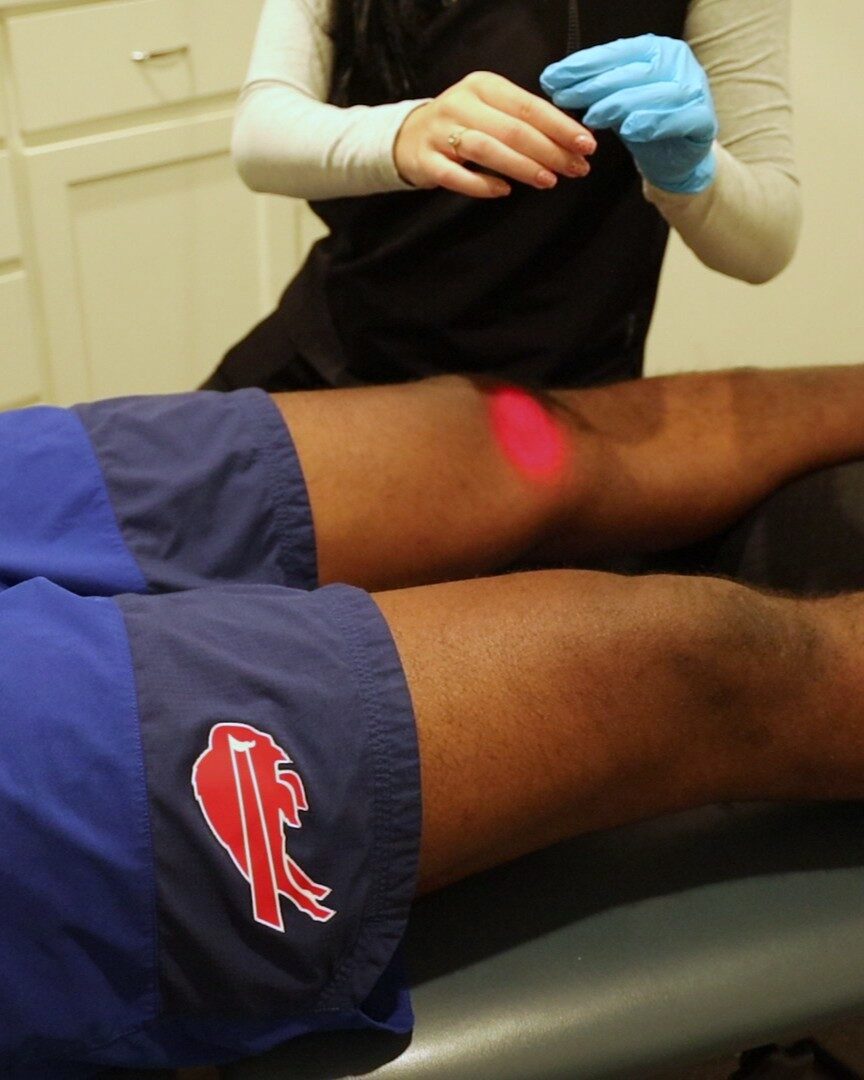
What to Expect During Treatment
During treatment, a specialized light therapy device is applied to the targeted area.
Most sessions last only a few minutes, depending on the condition being treated.
Patients typically experience little or no discomfort during treatment. Many report a gentle warming sensation, while others feel nothing at all.
Infrared Light Therapy is frequently combined with exercise, manual therapy, and other rehabilitation techniques to maximize recovery.
Is Infrared Light Therapy Safe?
Infrared Light Therapy is generally considered safe when administered by trained healthcare professionals using FDA-cleared equipment and established treatment protocols.
Because it is non-invasive and does not require medication or injections, many patients tolerate the treatment well. Your clinician will review your medical history to determine whether it is appropriate for your condition.
Research & Evidence
Photobiomodulation has been studied extensively in rehabilitation and sports medicine.
- Systematic reviews suggest red and near-infrared light therapy may reduce pain and improve function for certain musculoskeletal conditions when used alongside rehabilitation.
- Research indicates photobiomodulation may help support tissue repair and reduce inflammation through cellular signaling mechanisms.
- Clinical guidelines increasingly recognize photobiomodulation as a useful adjunct for selected musculoskeletal conditions, although treatment outcomes depend on appropriate dosing, treatment parameters, and patient selection.
Frequently Asked Questions
Does Infrared Light Therapy hurt?
No. The treatment is painless, and most patients either feel a gentle warmth or no sensation at all.
How many treatments will I need?
The number of sessions depends on your diagnosis, the severity of your condition, and your response to treatment. We'll develop a personalized treatment plan based on your evaluation.
Is this the same as a sauna?
No. Infrared Light Therapy delivers therapeutic light directly to targeted tissues, while an infrared sauna warms the body to promote relaxation and recovery. Although both use infrared energy, they serve different purposes.
Can Infrared Light Therapy replace physical therapy?
No. Infrared Light Therapy is most effective when integrated into a comprehensive rehabilitation program that includes exercise, education, and other evidence-based treatments.
References
- Hamblin MR. Mechanisms and Applications of the Anti-inflammatory Effects of Photobiomodulation.
- World Association for Laser Therapy (WALT). Clinical Recommendations for Photobiomodulation.
- American Physical Therapy Association (APTA). Guide to Physical Therapist Practice.
Support Your Recovery
Whether you're recovering from an injury, managing persistent pain, or looking to optimize your rehabilitation, Infrared Light Therapy may provide additional support as part of your personalized treatment plan.
Our team will determine whether this treatment is appropriate for your condition and integrate it into an evidence-based program designed to help you move better, recover more effectively, and return to the activities you enjoy.
Contact Acadiana Pain & Performance Rehab to learn whether Infrared Light Therapy is right for you.
See If Infrared Therapy Is Right for You